Antihypertensive medications have become indispensable in the domain of cardiovascular health, serving as vital components in the management of high blood pressure. Their importance lies in their capacity to regulate blood pressure levels and contribute to overall cardiovascular well-being.
Crafted to combat hypertension, antihypertensive medications play a crucial role in controlling elevated blood pressure. Whether through diuretics, beta-blockers, ACE inhibitors, or other classes of medications, these agents are tailored to address the diverse causes and manifestations of high blood pressure, ultimately fostering cardiovascular health.
Did you know?
The identification of nitric oxide as a signalling molecule in the cardiovascular system paved the
way for the development of nitric oxide-releasing medications, contributing significantly to
antihypertensive therapy. This groundbreaking work earned a Nobel Prize in Physiology or Medicine in
1998.
Pharmgenity Health supplies and exports Antihypertensive APIs including Propranolol HCl, acting as a manufacturer, supplier, distributor and exporter of antihypertensive APIs from Mumbai, India.
| SN | Image | Product Name | CAS No | Molecular Formula | Molecular Weight (g/mol) | Mechanism of Action |
|---|---|---|---|---|---|---|
| 1 | 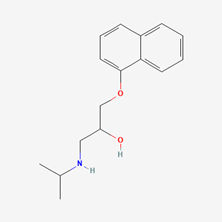 |
Propranolol HCl | 318-98-9 | C16H21NO2 · HCl | 295.80 | Non-selective beta-adrenergic receptor blocker that reduces heart rate, blood pressure, and cardiac output |
Other products are available based on customer requirements.
Send your requirements and our team will get back to you with technical documentation, sample availability and export pricing.
If the listed products don't precisely fit your requirements, we're ready to customize our offerings to meet your specific needs. Contact with us for a personalized quote.
Propranolol HCL is a non-selective beta-adrenergic receptor blocker that antagonizes both beta-1 receptors (predominantly in the heart) and beta-2 receptors (in bronchial and vascular smooth muscle). This distinguishes it from cardioselective beta-1 blockers like Metoprolol and Atenolol. Propranolol's non-selectivity makes it particularly useful for conditions beyond hypertension, including migraine prophylaxis, essential tremor, performance anxiety, thyrotoxicosis, and portal hypertension in cirrhosis. Its lipophilic nature allows CNS penetration, which contributes to both its therapeutic effects in anxiety and its potential for CNS-related side effects.
For Propranolol HCL API, critical quality parameters include optical purity (since the S-enantiomer is more pharmacologically active than the R-enantiomer), control of genotoxic impurity 1-naphthol and other process-related impurities, residual solvent monitoring with particular attention to chlorinated solvents from synthesis, particle size distribution for content uniformity in low-dose tablet formulations, and dissolution profile consistency for immediate-release and extended-release formulations.
Our Propranolol HCL API is manufactured in WHO-GMP certified facilities and complies with USP, BP, EP, and IP pharmacopeial standards. Each batch is tested for assay potency (98-102% on dried basis), identification by IR and HPLC, related substances including 1-naphthol and isopropylamine, heavy metals (NMT 20 ppm), residue on ignition, loss on drying, and specific optical rotation. We can supply batches meeting specific pharmacopeial requirements based on the target market's regulatory authority.
Yes, we can supply Propranolol HCL in grades optimized for extended-release formulations including sustained-release matrix tablets and controlled-release capsules. For matrix-based extended-release systems, we provide API with controlled particle size and consistent crystalline form that ensures reproducible drug release kinetics. We provide dissolution data in pH 1.2, pH 4.5, and pH 6.8 media to support development of extended-release products. Our API grades are compatible with both hydrophilic (HPMC-based) and hydrophobic matrix systems.
For Propranolol HCL API, we provide comprehensive regulatory documentation including Type II DMF for US FDA filings, CEP or ASMF for European submissions, and CTD-format dossiers for other markets. Our documentation package includes batch analysis data from three validation batches, stability data under ICH conditions supporting retest periods, impurity profiles with qualification, residual solvent data per ICH Q3C, elemental impurities risk assessment per ICH Q3D, GMP certificates, and the site master file.
Get in touch with our team for detailed product information, documentation, and export pricing.