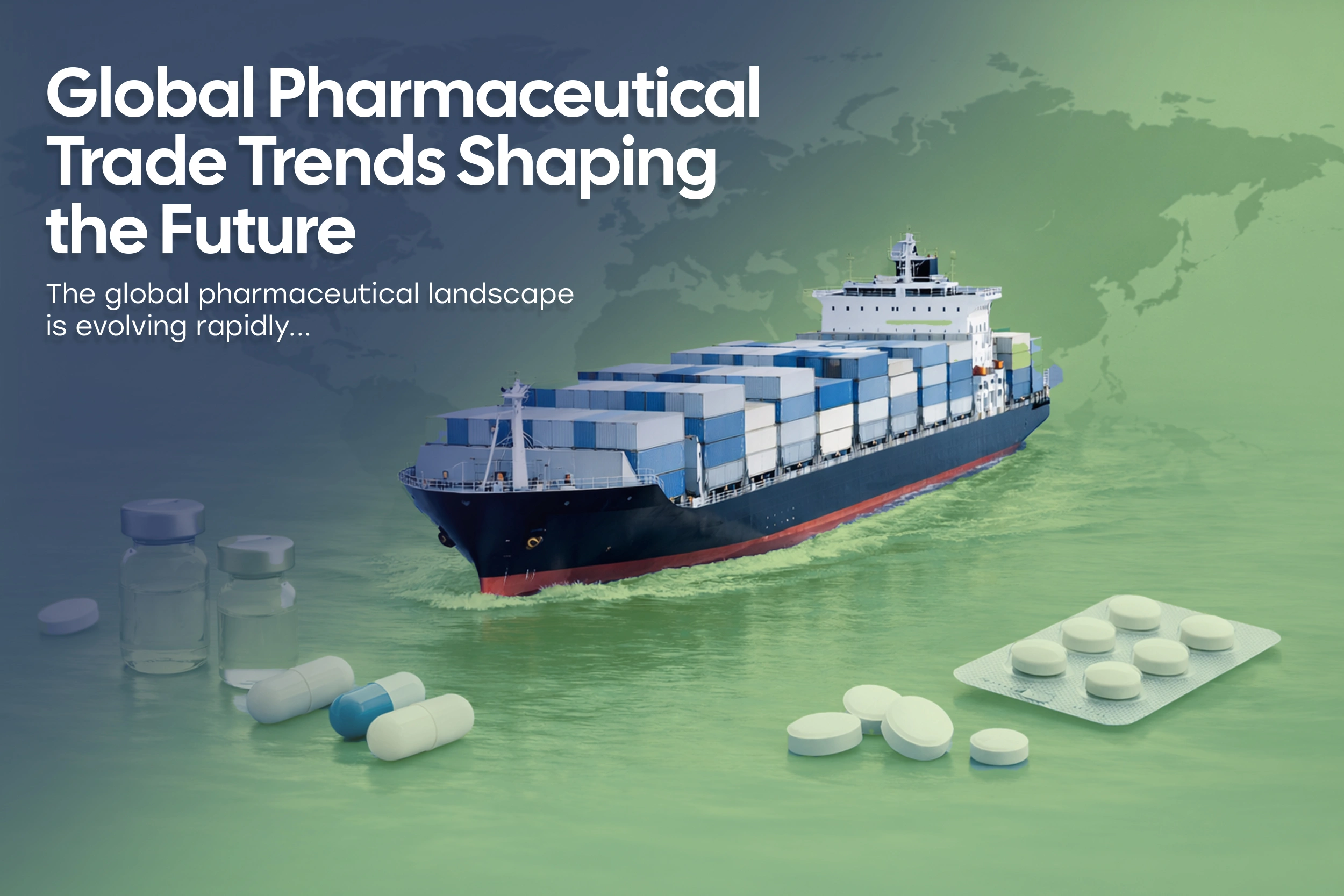
The global pharmaceutical industry is entering a defining phase in 2025. Shaped by regulatory evolution, supply chain realignments, innovation in formulations, and a renewed focus on affordability, the way medicines move across borders is changing rapidly.
For pharma importers and exporters, staying ahead of these trends is no longer optional — it is essential for growth, compliance, and long-term relevance.
At Pharmgenity Health, we closely track these shifts to help our partners navigate global markets with confidence. Here are the key pharma trends in 2025 that every importer and exporter should understand.
1. Shift from Cost-Only to Value-Driven Sourcing

While cost competitiveness remains important, 2025 is seeing a decisive shift toward value-based sourcing.
Importers are now evaluating suppliers based on:
- ?Regulatory readiness
- ?Documentation quality
- ?Supply consistency
- ?Sustainability practices
- ?Ability to customize products
Exporters who can demonstrate quality, compliance, and reliability alongside competitive pricing are gaining preference over low-cost-only suppliers.
2. Rising Demand for Advanced APIs and Formulation-Ready Inputs
Global markets are demanding newer molecules, combination APIs, and formulation-ready ingredients rather than basic raw materials alone.
Key growth areas include:
- ?Anti-diabetic and cardiovascular APIs
- ?Oncology and specialty APIs
- ?Heat-stable APIs for tropical markets
- ?APIs for sustained and controlled-release formulations
This trend allows local manufacturers to launch innovative medicines faster without heavy R&D investments.

3. Smart Excipients and Formulation Innovation Take Center Stage

Excipients are no longer treated as “inactive” components. In 2025, smart excipients are being leveraged to:
- ?Improve bioavailability
- ?Reduce API dosage requirements
- ?Enhance stability and shelf life
- ?Improve patient compliance
For importers, this means working with exporters who understand formulation science, not just material supply.
4. Herbal, Nutraceutical, and Plant-Based Products Go Mainstream
Global consumers are increasingly choosing natural and plant-based wellness solutions, supported by science and standardization.
Key trends include:
- ?Standardized herbal extracts
- ?Clean-label nutraceuticals
- ?Plant-based cosmetic ingredients
- ?Hybrid products combining pharma + herbal benefits
Exporters must ensure these products meet global regulatory and safety standards, especially for regulated markets.

5. Regulatory Compliance as a Competitive Advantage

In 2025, compliance is no longer just a requirement — it’s a differentiator.
Importers are prioritizing partners who can provide:
- ?Complete CTD and DMF documentation
- ?Stability data and certificates of analysis
- ?Labeling and packaging compliance
- ?Support aligned with SAHPRA, WHO, and other global regulators
Pharma trade is increasingly moving toward documentation-first partnerships.
6. Merchant Exporters Gain Strategic Importance
Merchant exporters are playing a more strategic role in global pharma trade by:
- ?Bridging manufacturers and importers
- ?Offering multi-product portfolios
- ?Reducing sourcing complexity
- ?Ensuring regulatory alignment
- ?Providing customized, market-specific solutions
This model allows importers to scale faster while managing risk effectively.

7. Resilient and Flexible Supply Chains Become Non-Negotiable

Post-pandemic realities continue to influence sourcing strategies. In 2025:
- ?Diversified supplier networks are preferred
- ?Smaller, frequent shipments are gaining popularity
- ?Temperature-controlled and climate-resilient logistics are critical
Exporters who offer flexible supply models will outperform rigid, volume-only players.
Pharmgenity Health: Supporting Global Pharma Trade in 2025
We align our export strategy with global pharma trends by combining a full-spectrum portfolio, accredited sourcing, and regulatory-ready documentation.
Full-Spectrum Portfolio
APIs, excipients, finished formulations, herbal and cosmetic ingredients — all under one roof.
Accredited Sourcing
Sourcing from WHO-GMP, USFDA, EU-GMP, and other accredited manufacturers.
Regulatory-Ready Documentation
Documentation tailored to destination markets for smooth, compliant market entry.
What We Offer
Our Focus
Enable innovation while ensuring accessibility and compliance — a partner-driven approach for long-term collaboration across global markets.
Conclusion
The global pharma landscape in 2025 is defined by innovation with responsibility. Importers and exporters who understand these trends — and adapt accordingly — will be best positioned to grow sustainably.
As markets demand higher standards, smarter formulations, and ethical pricing, partnerships grounded in quality, trust, and expertise will shape the future of global healthcare trade.
Pharmgenity Health remains committed to helping partners navigate these changes and build resilient, future-ready pharma supply chains.
We Have Answers
These FAQs help pharma importers and exporters interpret major 2025 trade, supply, and regulatory trends more clearly.
Importers and exporters should watch regulatory shifts, supply chain resilience, therapeutic demand changes, pricing pressure, and sourcing diversification across global pharmaceutical markets.
Supply chain changes are pushing buyers and exporters to prioritize dependable sourcing, better inventory planning, and lower disruption risk when entering or serving international markets.
Regulatory changes matter because they can affect approvals, documentation, labeling, and market-entry timelines. Staying updated helps businesses reduce delays and improve trade readiness.
Pharma buyers should prioritize documentation quality, supply continuity, market-specific compliance, and cost-effective sourcing strategies as international market conditions continue to evolve.
Exporters can stay competitive by strengthening compliance readiness, expanding relevant product categories, improving responsiveness, and building reliable long-term buyer relationships.
Related Blogs
The Rise of Biosimilars
Global export opportunities for Indian companies in the fast-growing biosimilars segment.
Read MoreThe Global Rise of Peptides: A New Era
How peptide therapeutics are reshaping diabetes, oncology, anti-aging, and cardiovascular care worldwide.
Read MorePlant-Based Supplements & Herbal Wellness Trends
How natural healthcare is reshaping global pharma markets for importers and exporters.
Read More