Pharmaceutical Excipients: A Complete Guide to Their Role in Modern Drug Formulations
When people think about medicines, they generally focus on the active ingredient responsible for treating a condition. However, there is another important group of ingredients that plays a significant role in making medicines effective, stable and suitable for use: pharmaceutical excipients.
At Pharmgenity Health, we recognise the importance of quality pharmaceutical ingredients in modern healthcare manufacturing. As an India-based global pharmaceutical merchant exporter, we support international buyers in sourcing pharmaceutical ingredients through our manufacturing partner network, with a focus on quality-oriented procurement, competitive sourcing and export coordination. Our approach covers APIs, excipients, intermediates and other pharmaceutical ingredients required by the global healthcare industry.
What Are Pharmaceutical Excipients?
Pharmaceutical excipients are substances used alongside active pharmaceutical ingredients (APIs) during the manufacturing of medicines. Unlike APIs, which provide the primary therapeutic effect, excipients support the formulation, manufacturing, stability, appearance and delivery of a medicine.
The choice of excipient depends on the dosage form, API characteristics, manufacturing process and intended performance of the final product.
For example, a tablet may contain an API along with binders, fillers, disintegrants and lubricants. A liquid formulation may require solvents, preservatives, sweeteners or stabilising agents.
Different excipients perform different functions in pharmaceutical formulations. Some widely used categories include:
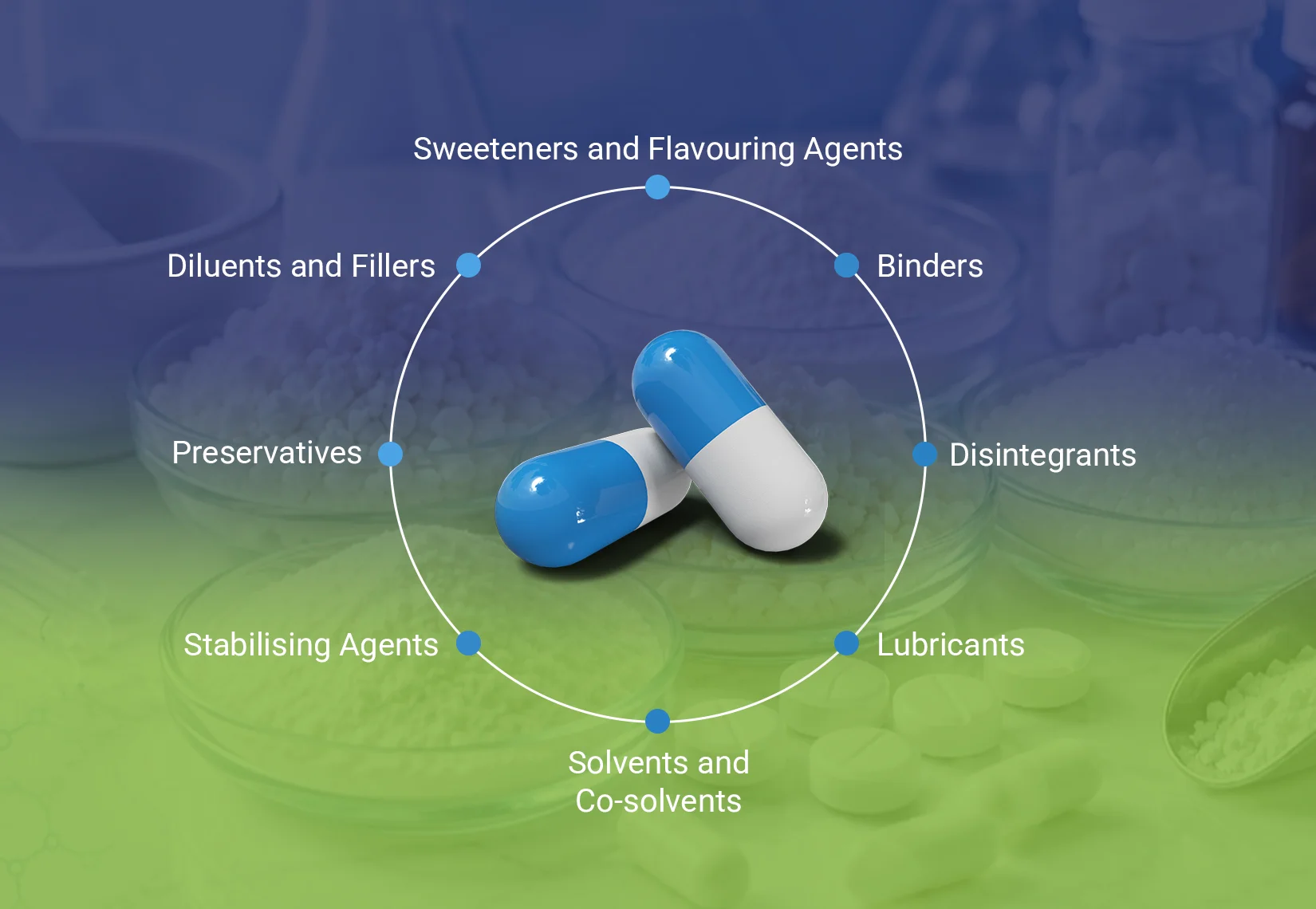
- Diluents and Fillers: Increase the bulk of a formulation and help achieve the required tablet or capsule size. Examples include microcrystalline cellulose and lactose.
- Binders: Help hold the ingredients together during tablet formation. Examples include povidone and certain starch derivatives.
- Disintegrants: Help tablets break apart after administration, supporting the release of the active ingredient. Examples include croscarmellose sodium and sodium starch glycolate.
- Lubricants: Reduce friction during tablet manufacturing and help prevent sticking. Magnesium stearate is a commonly used example.
- Preservatives: Help protect suitable formulations against microbial growth. Examples include selected parabens and other approved preservatives.
- Stabilising Agents: Help maintain the physical or chemical stability of a formulation.
- Solvents and Co-solvents: Support the dissolution or incorporation of ingredients in liquid and other formulations.
- Sweeteners and Flavouring Agents: Improve the taste and acceptability of certain oral medicines.
An excipient’s suitability must always be evaluated for the specific formulation, route of administration and applicable regulatory requirements.
Why Excipients Matter in Modern Pharmaceutical Manufacturing
Excipients are not simply inactive additions. Their selection can influence several important aspects of a medicine:
- Product stability: Appropriate excipients can help protect formulations against certain physical and chemical changes.
- Manufacturing efficiency: Binders, lubricants and flow agents can support consistent manufacturing operations.
- Drug release: Disintegrants and specialised excipients can influence how an API is released from a dosage form.
- Patient acceptability: Sweeteners, flavouring agents and coating materials can improve the experience of taking certain medicines.
- Formulation flexibility: Different excipient combinations allow manufacturers to develop tablets, capsules, syrups, suspensions and other dosage forms.
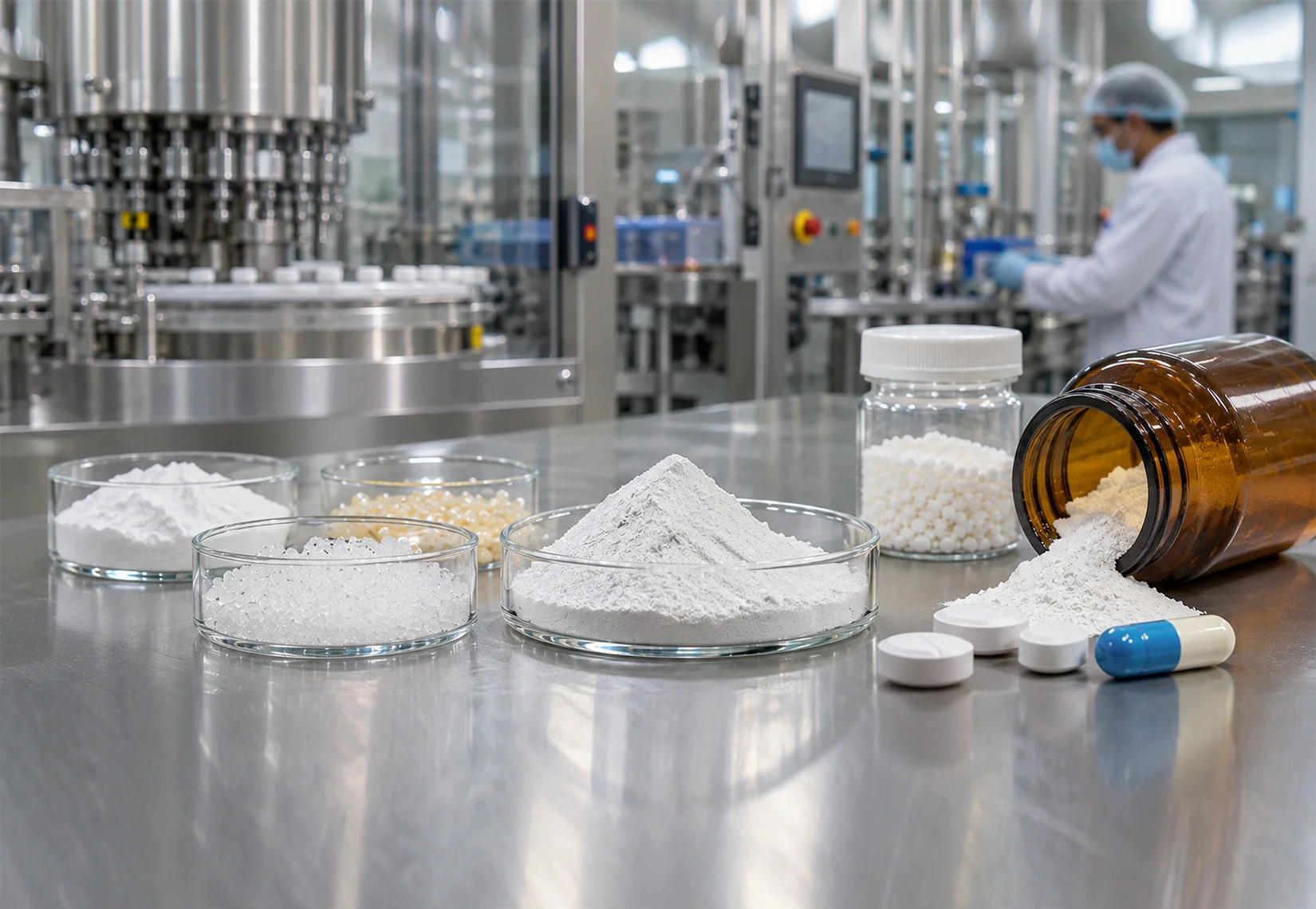
With pharmaceutical formulations becoming increasingly sophisticated, selecting suitable excipients has become an important part of formulation development and quality management.
What Should Buyers Consider When Sourcing Pharmaceutical Excipients?
For pharmaceutical manufacturers, sourcing decisions should go beyond price and availability. The quality and suitability of an excipient can directly influence the performance of the finished formulation.
Before selecting a supplier, buyers should consider:
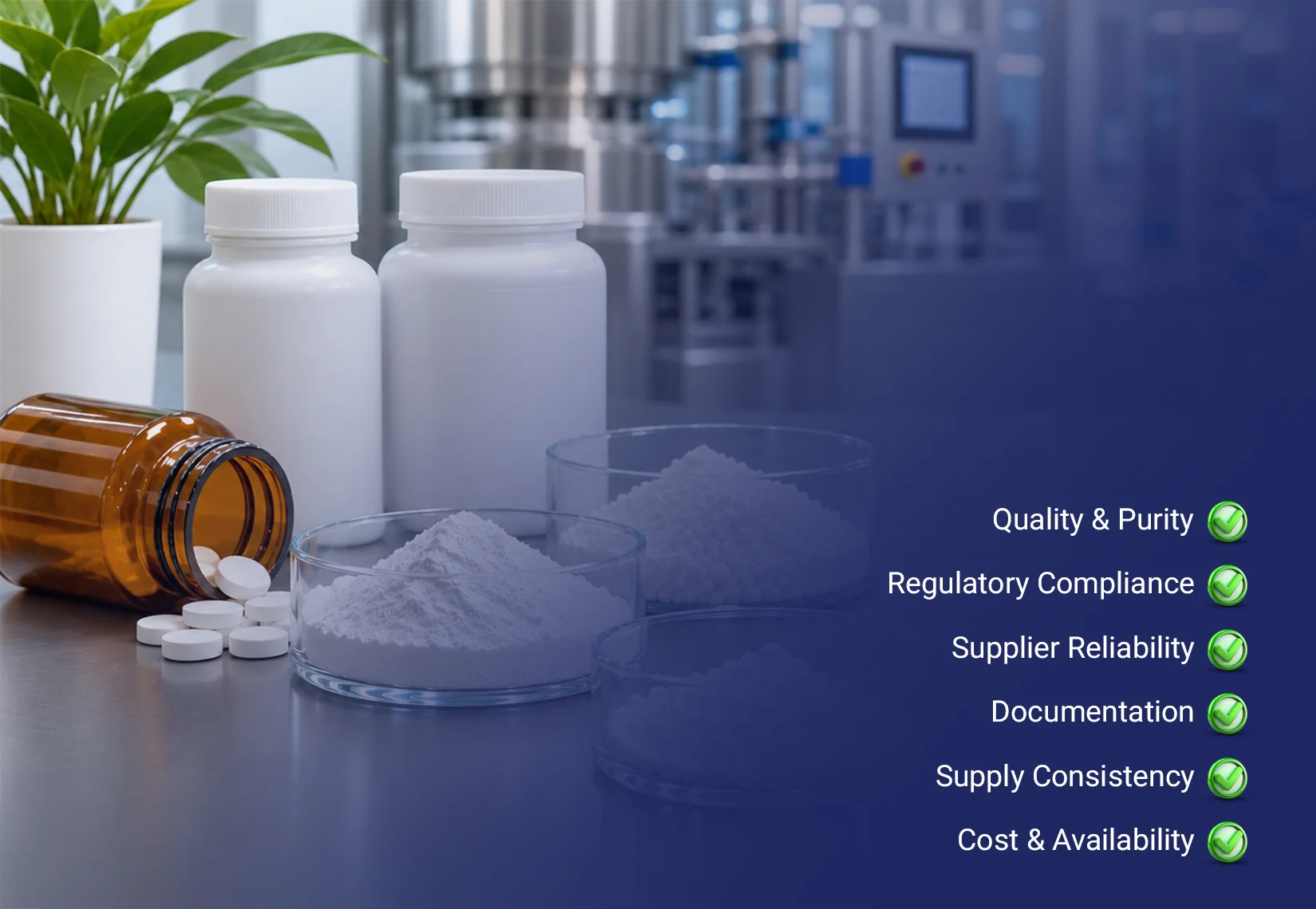
- Applicable pharmacopoeial standards, such as IP, BP, USP or Ph. Eur.
- Certificate of Analysis and product specifications.
- Manufacturer quality certifications and applicable GMP documentation.
- Regulatory suitability for the intended application and destination market.
- Batch consistency, traceability and storage requirements.
- Technical documentation and relevant safety information.
- Minimum order quantity, lead time and supply arrangements.
Buyers should also check whether an excipient is suitable for the intended route of administration and dosage form. A material used in an oral formulation, for example, should not automatically be assumed suitable for an injectable application.
How Pharmgenity Health Supports Global Excipients Sourcing
International pharmaceutical procurement involves several considerations, from identifying suitable manufacturing partners to coordinating documentation and export requirements. Pharmgenity Health aims to make this process more organised for global buyers.
Our strengths include:
Global Reach
Supporting sourcing enquiries from international pharmaceutical buyers, including markets across South Africa & other African Countries, South East Asia & other global markets and other regions.
Quality Excellence
Working with manufacturing partners holding relevant quality certifications and supporting access to product-specific quality documentation.
Competitive Sourcing
Exploring suitable procurement options based on product specifications, order quantities and commercial requirements.
Client-Centric Focus
Understanding individual sourcing needs and coordinating solutions around buyer expectations.
Export Coordination
Supporting communication and documentation requirements involved in international pharmaceutical shipments.
Whether a buyer requires commonly used tablet excipients or specialised ingredients for more complex formulations, Pharmgenity Health focuses on responsive sourcing support and dependable business coordination.
Explore Pharmaceutical Excipients with Pharmgenity Health
Looking for pharmaceutical excipients from India for your manufacturing or distribution requirements?
Connect with Pharmgenity Health to discuss your required ingredients, specifications, quantities and destination market. Our team can help review your sourcing requirements and explore suitable options through our manufacturing partner network.
Enquire NowFrequently Asked Questions About Pharmaceutical Excipients
Find answers to common questions about pharmaceutical excipients, their types, applications, quality requirements and global sourcing opportunities from India.
Pharmaceutical excipients are ingredients added to medicines alongside active pharmaceutical ingredients. They support formulation, stability, manufacturing, appearance and drug delivery.
Common categories include diluents, binders, disintegrants, lubricants, preservatives, stabilising agents, solvents, sweeteners and coating agents.
An API provides the intended therapeutic effect of a medicine, while an excipient supports the formulation, manufacturing, stability or delivery of the API.
Excipients help provide the required tablet size, strength, binding, disintegration and manufacturing characteristics. Their selection can also influence product stability and performance.
Examples include microcrystalline cellulose, lactose, magnesium stearate, povidone, croscarmellose sodium and sodium starch glycolate.
They are generally not intended to provide the primary therapeutic effect of a medicine. However, they can influence formulation performance, drug release, stability and tolerability.
Buyers should request a Certificate of Analysis, product specifications, applicable GMP documentation, manufacturer details, safety information and other regulatory documents relevant to the intended market.
Pharmaceutical-grade excipients are materials manufactured and controlled to meet applicable quality requirements for pharmaceutical use. Buyers should verify the relevant standards and documentation.
India offers access to a broad pharmaceutical ingredient supply chain, manufacturing partners, competitive sourcing opportunities and established international export channels.
Pharmgenity Health supports international buyers through its merchant-export model, helping coordinate excipient sourcing, manufacturing partner communication, product documentation and export-related requirements.